
What do you think people do on stage? Do people on stage speak? Dance? Sing? Can they stand still and not move for 14.3 minutes? Can they sing if they are bad singers? Can they dance if they are bad dancers? Within and beyond these questions, an experimental art form is born.
The introduction to Theatrical Poetry comes quite simply. It says, “There are no rules.” This is a good unintimidating start. It is true, there are no rules to Theatrical Poetry but there are rules within us. We have been taught and we have learned, consciously and subconsciously. The teaching tells us that we need permission to be on stage. We need permission to dance, to sing, to write, to speak, to perform. The permission becomes the threshold. And the burden becomes to not put anything on stage that doesn’t entertain. Entertainment, then, becomes the burden of the performer. Theatrical Poetry simply says, “It is not your burden to entertain, but it is to question.” And within that, Theatrical Poetry becomes a medium of learning and unlearning.
To tell you the truth, if you haven’t yet quite figured out, Theatrical Poetry is an experimental art form and I am its mother.
Nupur
Before it, there were words, they lived in me and came out to respond and to provoke.
Then, there was theatre; it was compelling, beckoning, consuming.
Then came spoken word, giving structure, meaning, reverence.
Soon after there was music – bewildering, standing over me, it didn’t live in me, but it filled me quite to the brim.
Of all this and more, I birthed Theatrical Poetry. It came shivering out of me because it needed so badly to breathe. I can’t tell you that the root of Theatrical Poetry is in one form or another, because truly the root of it is in the restrictions of every other art form. It exists because it has something to say and it wants to say it will all the chords and colours.
The Art Form
What Are The Tools Of Theatrical Poetry?
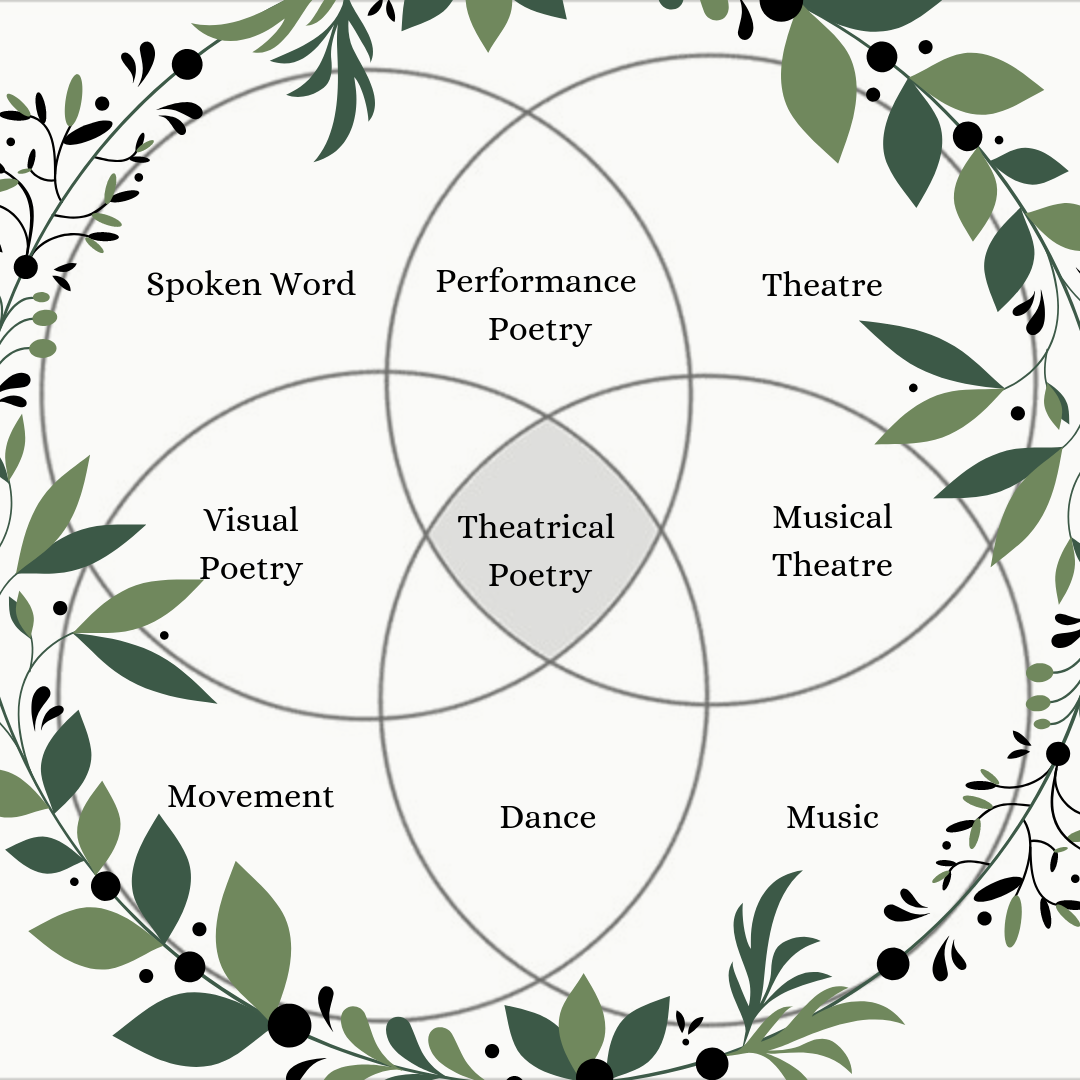
See Theatrical Poetry as a tool to tell a good story. Tools that are being offered to you are here below:
I offer you it, the way you offer a child a doll. To play with, to experiment with, to imagine with, to grow with.
What does it looks like?
- It is an art form for a writing-curious-actor or an acting-curious-writer or a curious-everything-artist.
- People practicing this art form are building performances around their lived experiences, world views, and perceptions.
- A lot of the shows are solo performances. Watch here a trailer for a Theatrical Poetry Show called Slam by Neil Basu.
- Each performer is the writer and the actor of the performance. In most cases Theatrical Poet elect themselves as the directors, but they also have the agency to work with a director they trust.
- A lot of the burden of a Theatrical Poetry performance lies in the words of the creator. His responsibility is create visually and intellectually stimulating scripts.
- Editing is an active element of the process of creating a performance. Each word creates a visual, each visual creates a word.
- Theatrical Poetry is an authentic expression of your self and your story. If your story demands that you sing the song you heard on your first date, then you sing. The song demands not to entertain, but to evoke. If the script demands you to dance, then you dance the best way you know how.
- Create using the whole of you. Your eyes, your mouth, your hands, your legs, your story. The stories that move your inner self are the ones that move your physical, external self. And the stories that compel your physical self to move are the ones that move the audience too.
What is defies, and what is it not?
It is not an experimental space that is thrust upon you to create masterpieces in. Theatrical Poetry acknowledges the humanity of both the learner and the facilitator. Each space created to learn and experiment with Theatrical Poetry is truly experimental. There is failure, there are tears, there is chaos – a very necessary element for any creation. It is a medium of honest, authentic creation in a town over from Spoken Word which has lost a lot of goodwill in the last few years. Theatrical Poetry seeks to change that.
Theatrical Poetry is awake and aware in its adaptation. It takes the space and audience into account.
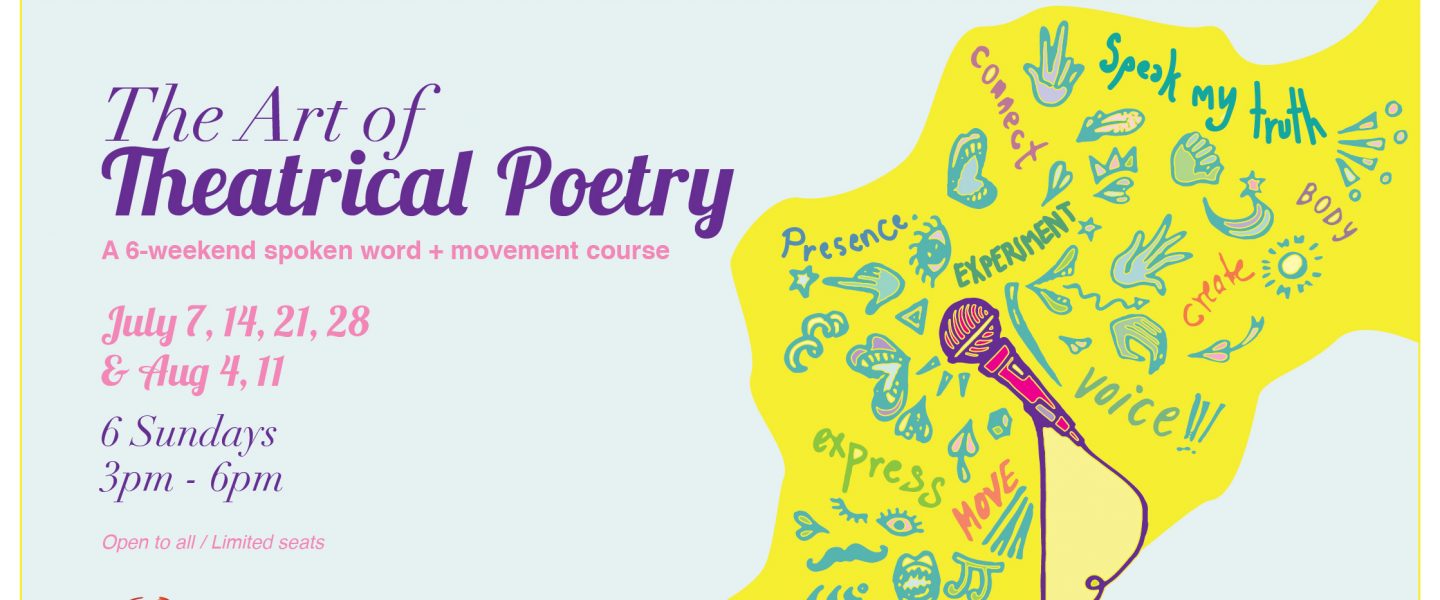
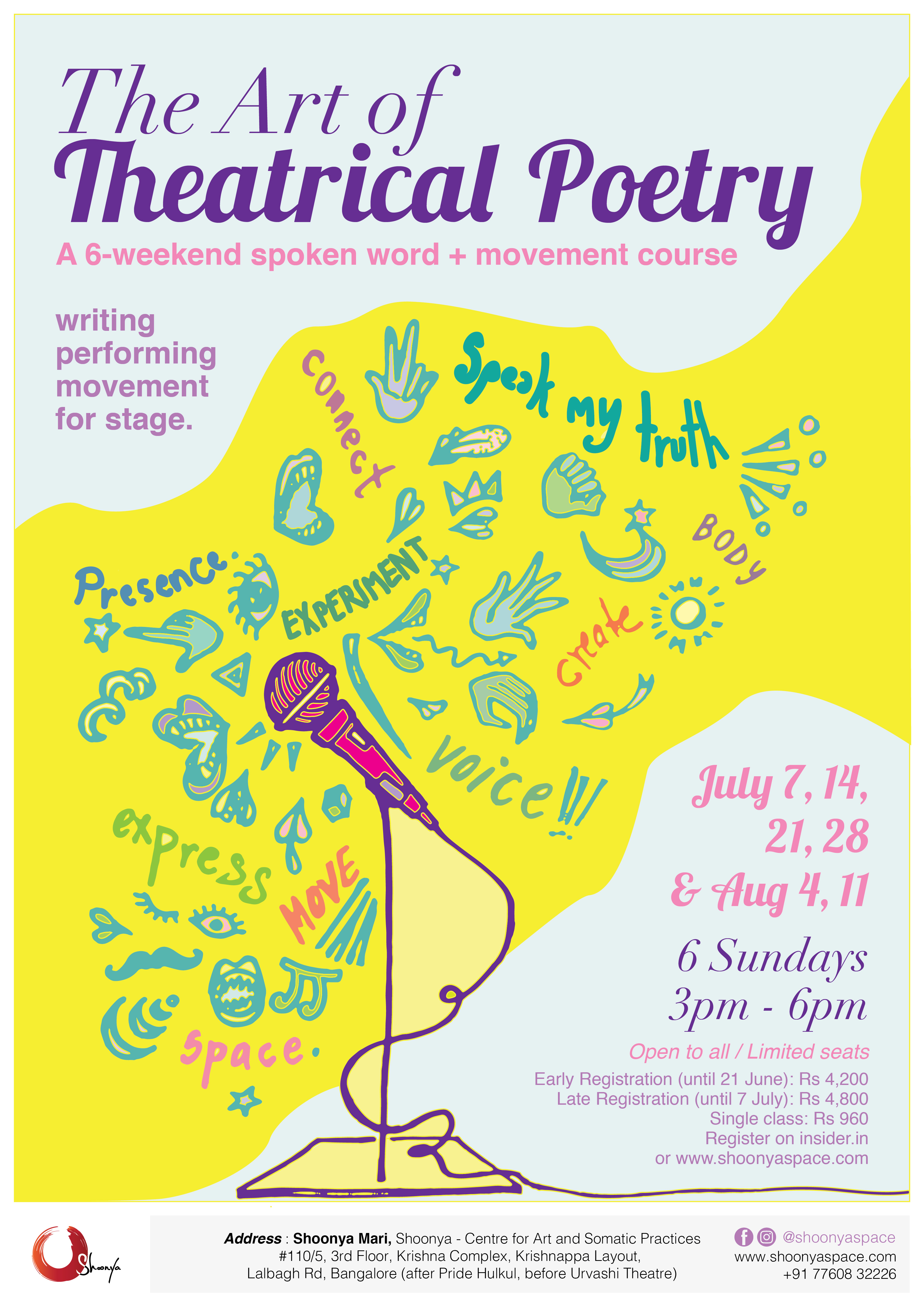
Finally, I invite you to step into the arms of Theatrical Poetry and play around with the art form with me starting 7 July, 2019 in Bangalore. Call +91 8197269121 to book.
 Theatrical Poetry India